February 2012
Artist: Gary Hill. Production: Reilly Donovan. Exhibition:
Active Presence - Action, Object and Public. Venue: Museo MARCO,
Vigo, Galicia (Spain). Curators: Sergio Edelsztein and Kathleen
Forde
installation, interactive, kinect, performance, processing,
projection, sound
When first getting hired on at Süperfad I created a set of custom
software for media artist Gary Hill’s 2012 work Writing Corpora.
The new work was created for the international group exhibition
Active Presence: Action, Object and Public, which debuted at the
Museo MARCO in Vigo, Galacia (Spain) during February of this year.
The exhibition, curated by Sergio Edelsztein and Kathleen Forde,
focused on artists whose practice contains both performance and
installation elements. The overall gist of Writing Corpora,
without paraphrasing the artist too much, is physical gestures
triggering text, video and audio relating to idiomatic phrases
that refer to the human body (i.e. “put your foot in your mouth”),
in both English and, in this version, Galician (the native tongue
in Vigo). The piece is a continuation of the artist’s conceptual
work focused on the convergence of body and language utilizing our
current era’s ever evolving new technologies for self-expression.
For this project Süperfad provided technical support and code
development, creating a software framework that allowed the artist
to play back media elements throughout the gallery space with no
physical controller other than the performers movements. The
result is a full-featured toolkit that can trigger any audio
and/or video media with practically any body pose or gesture.
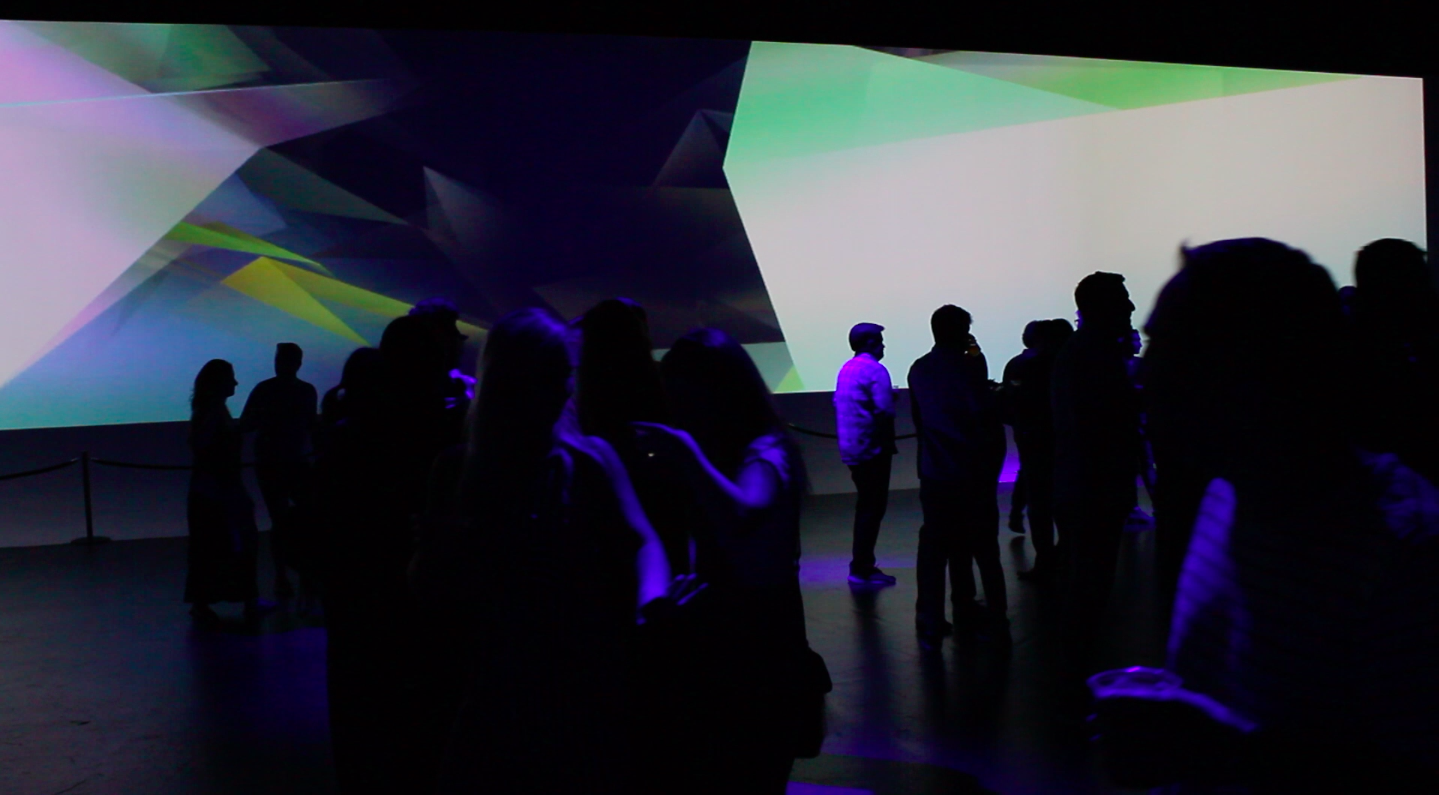
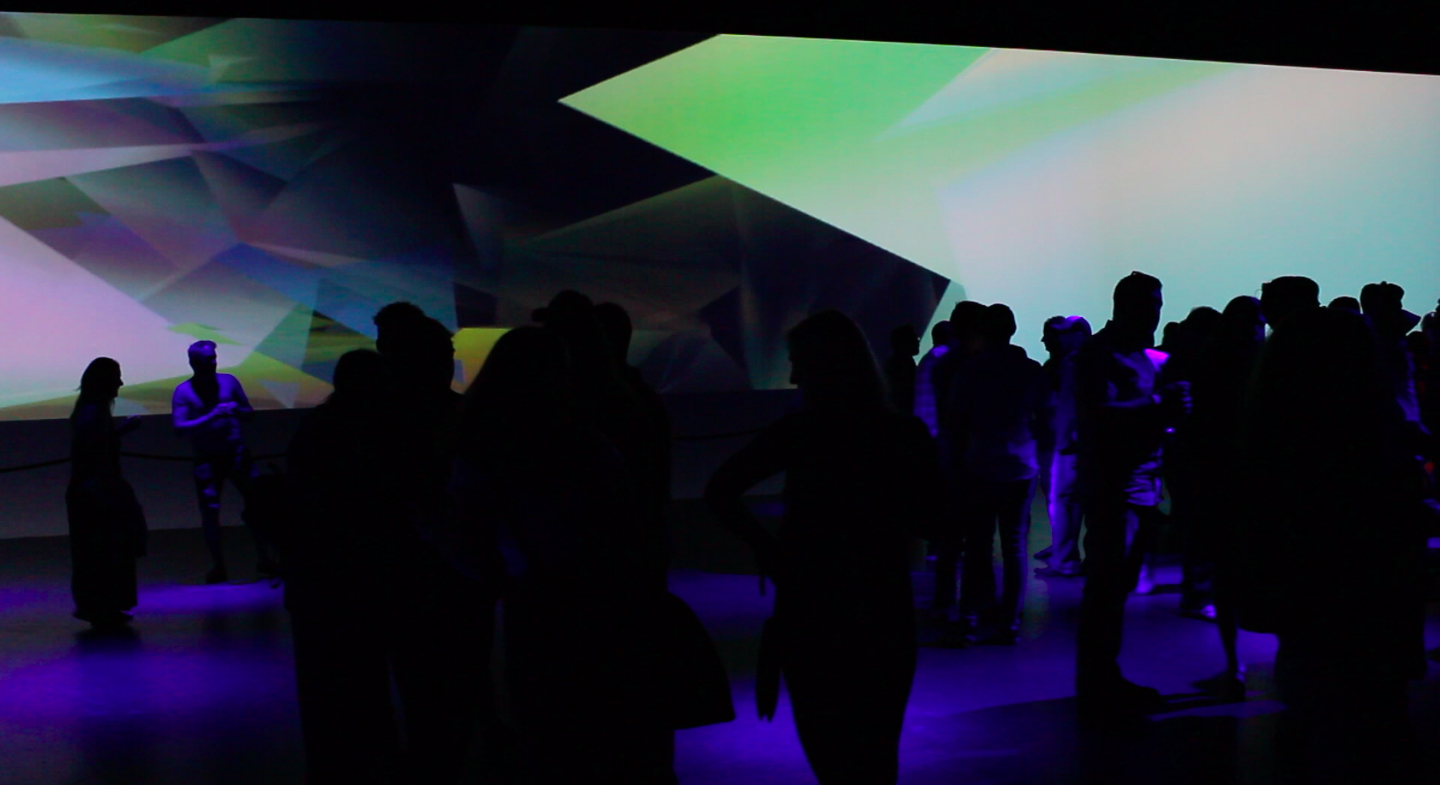
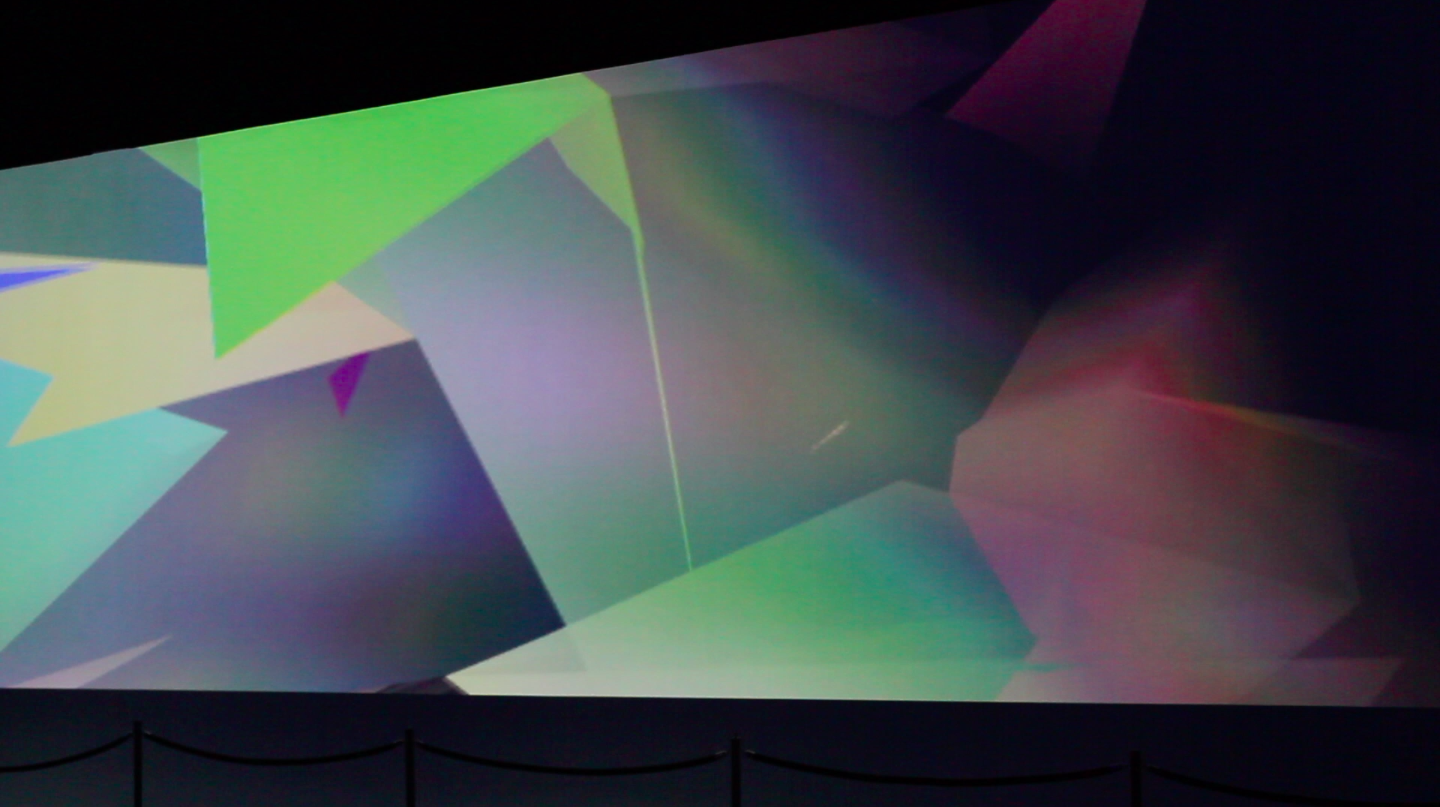
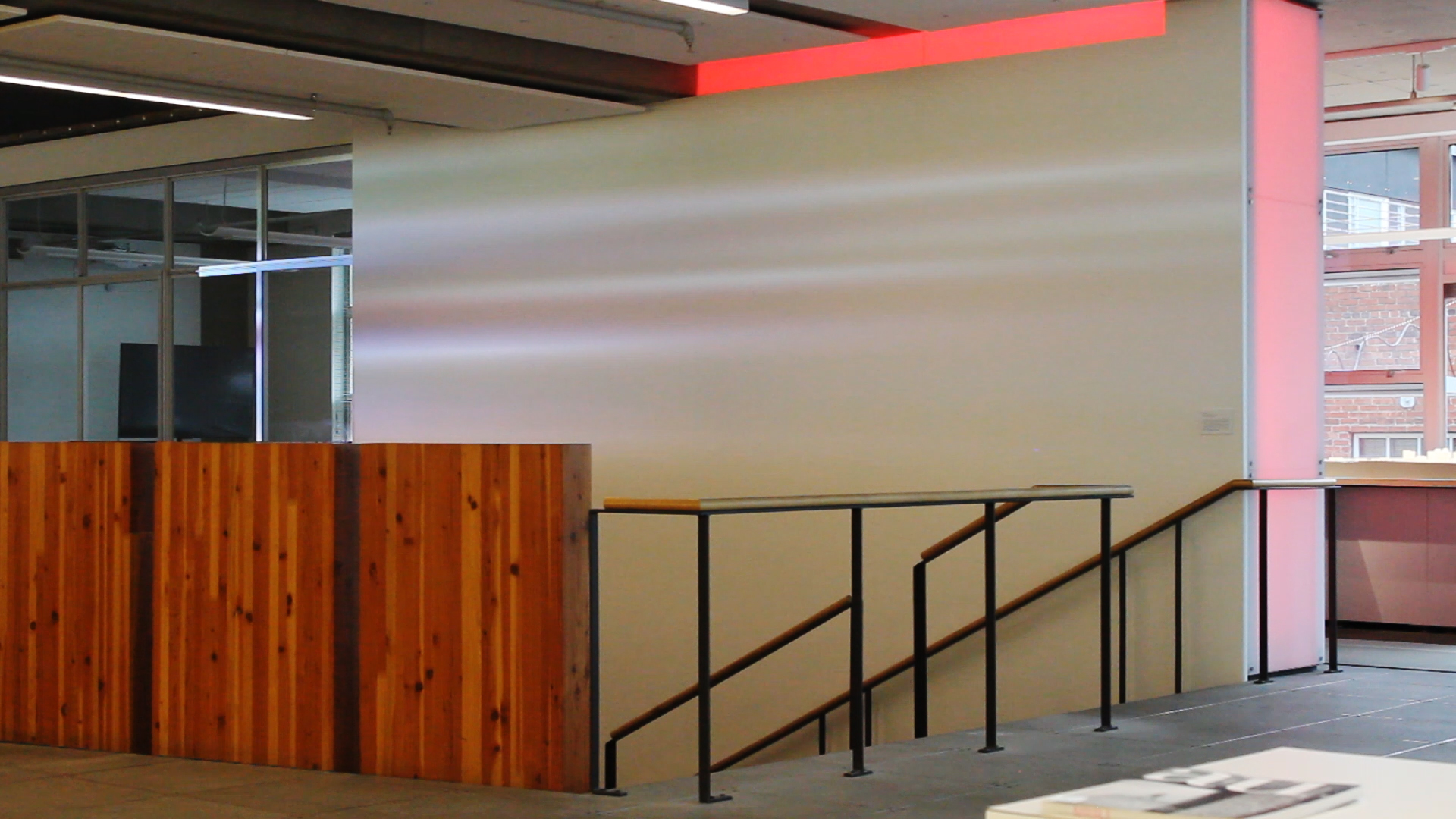
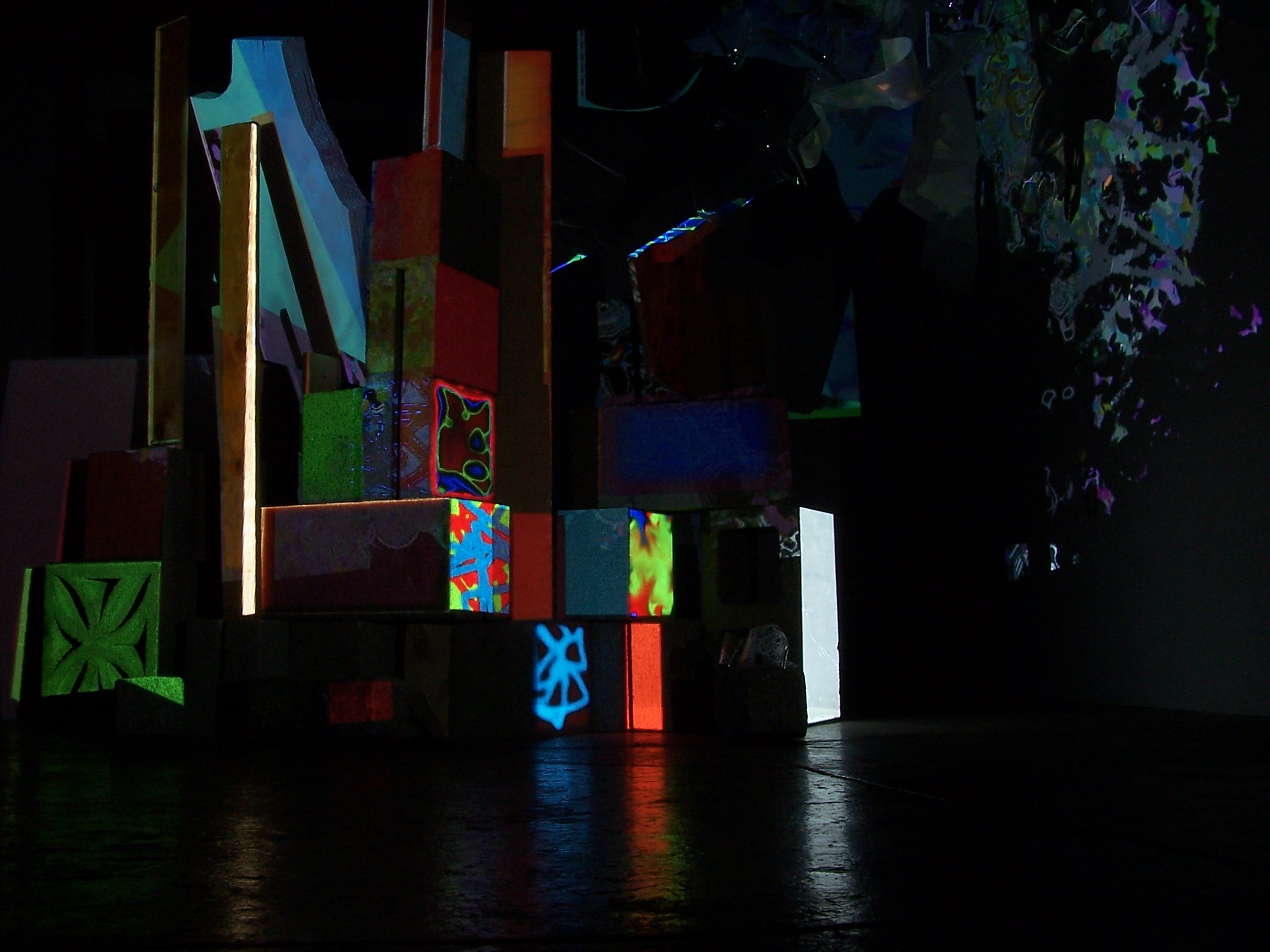
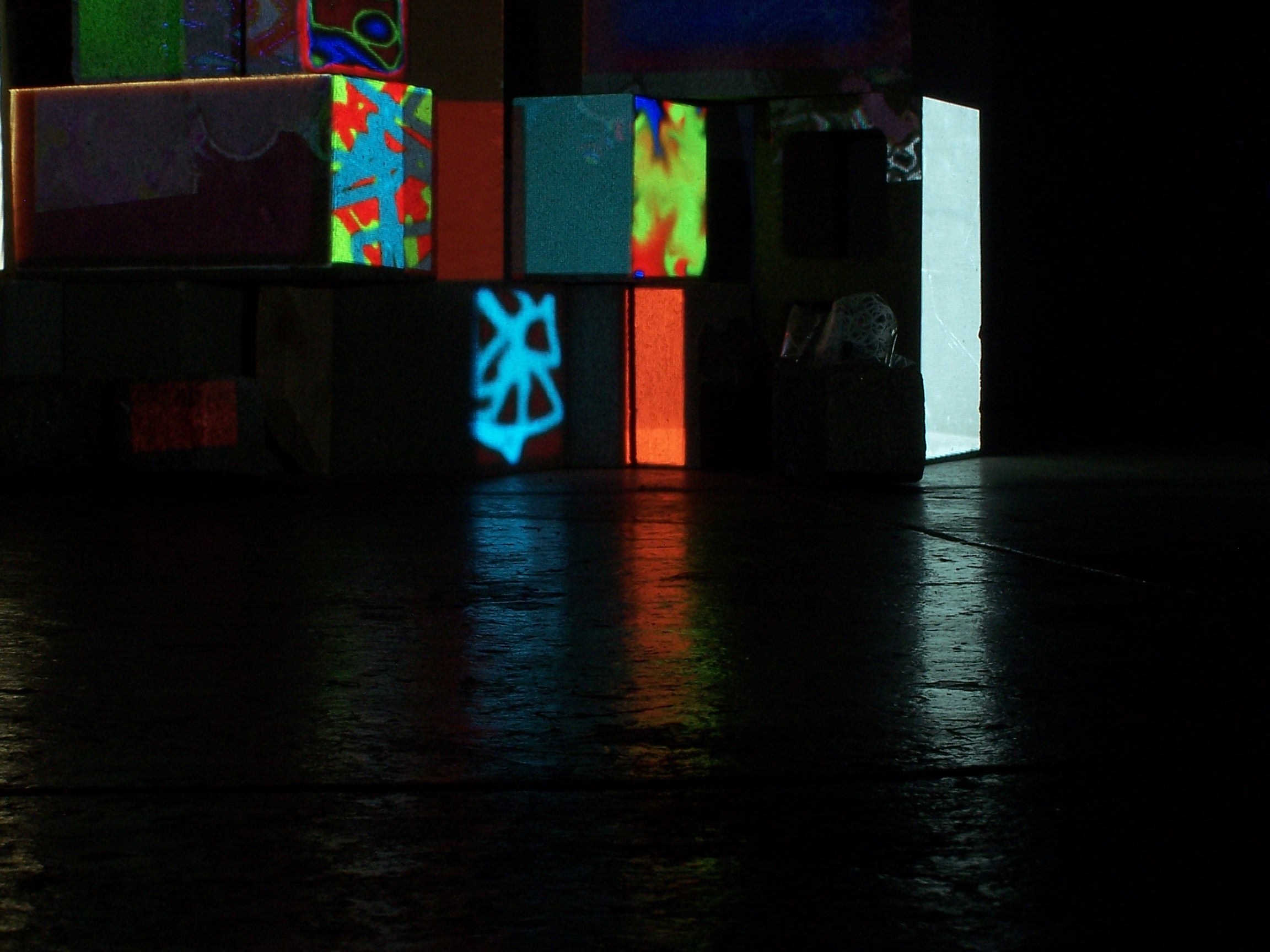
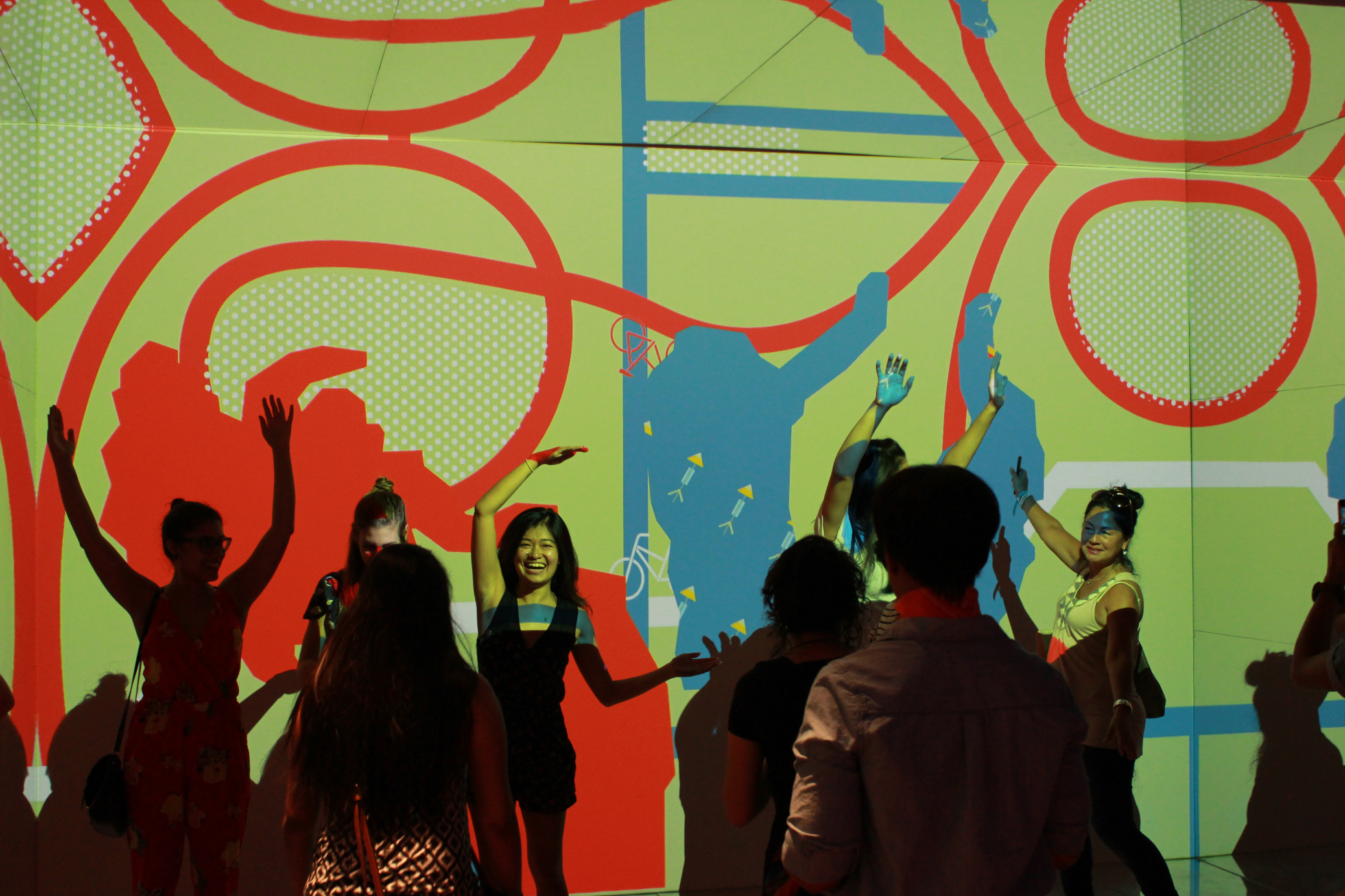
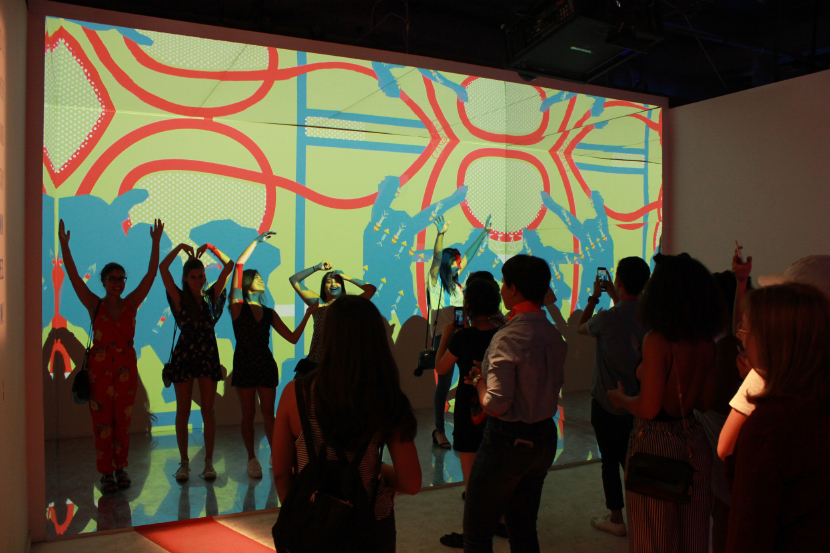
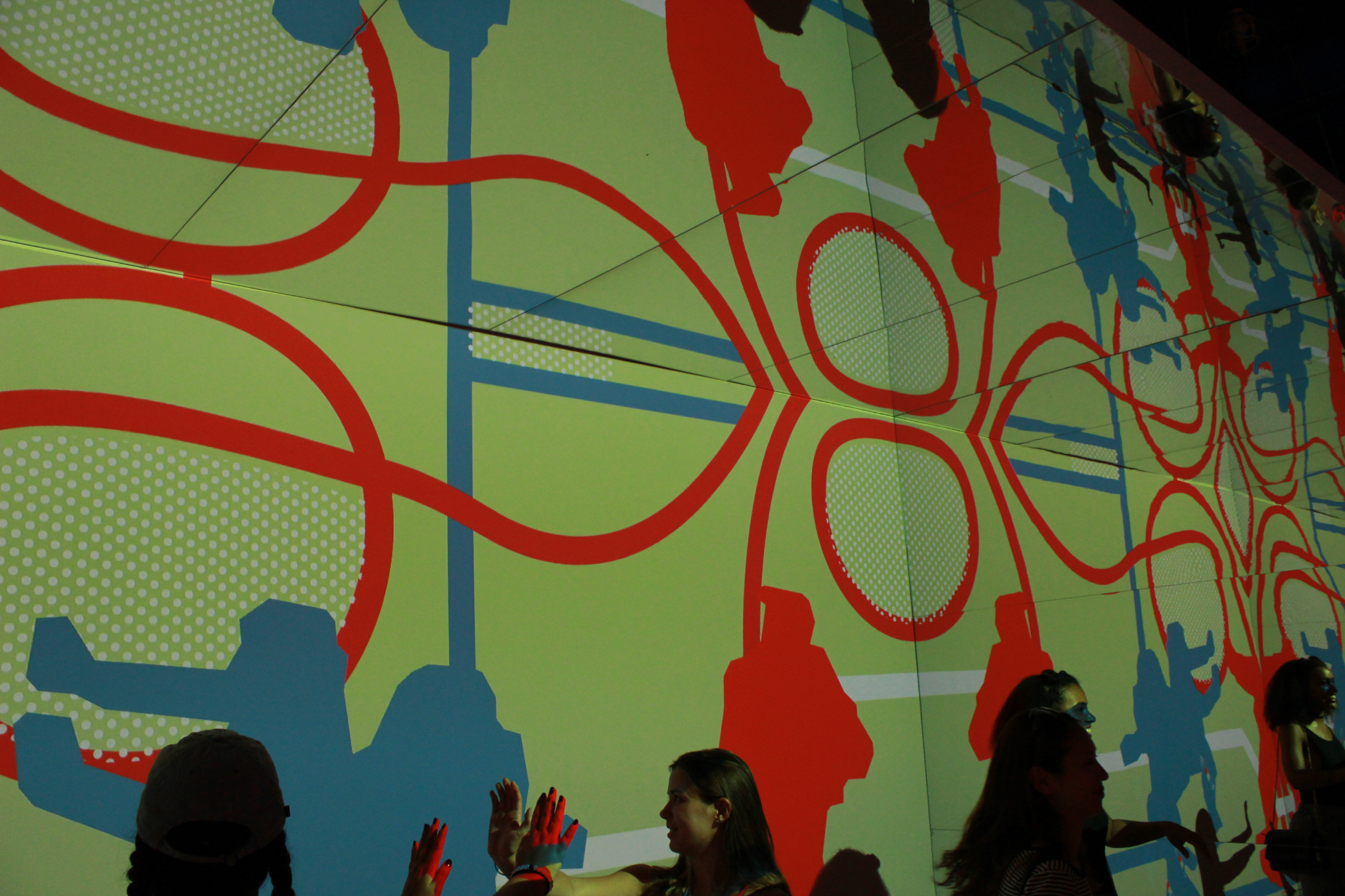
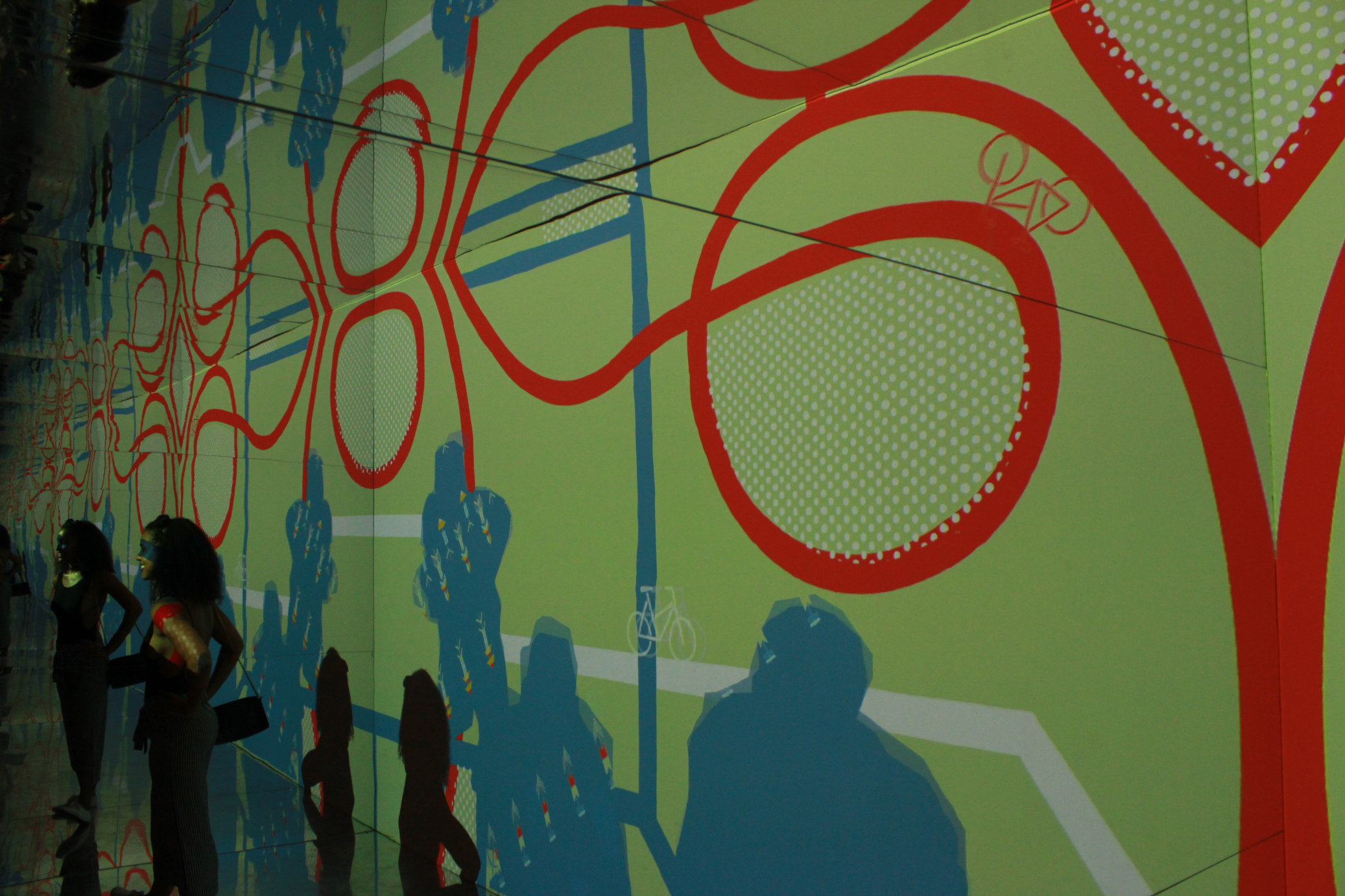
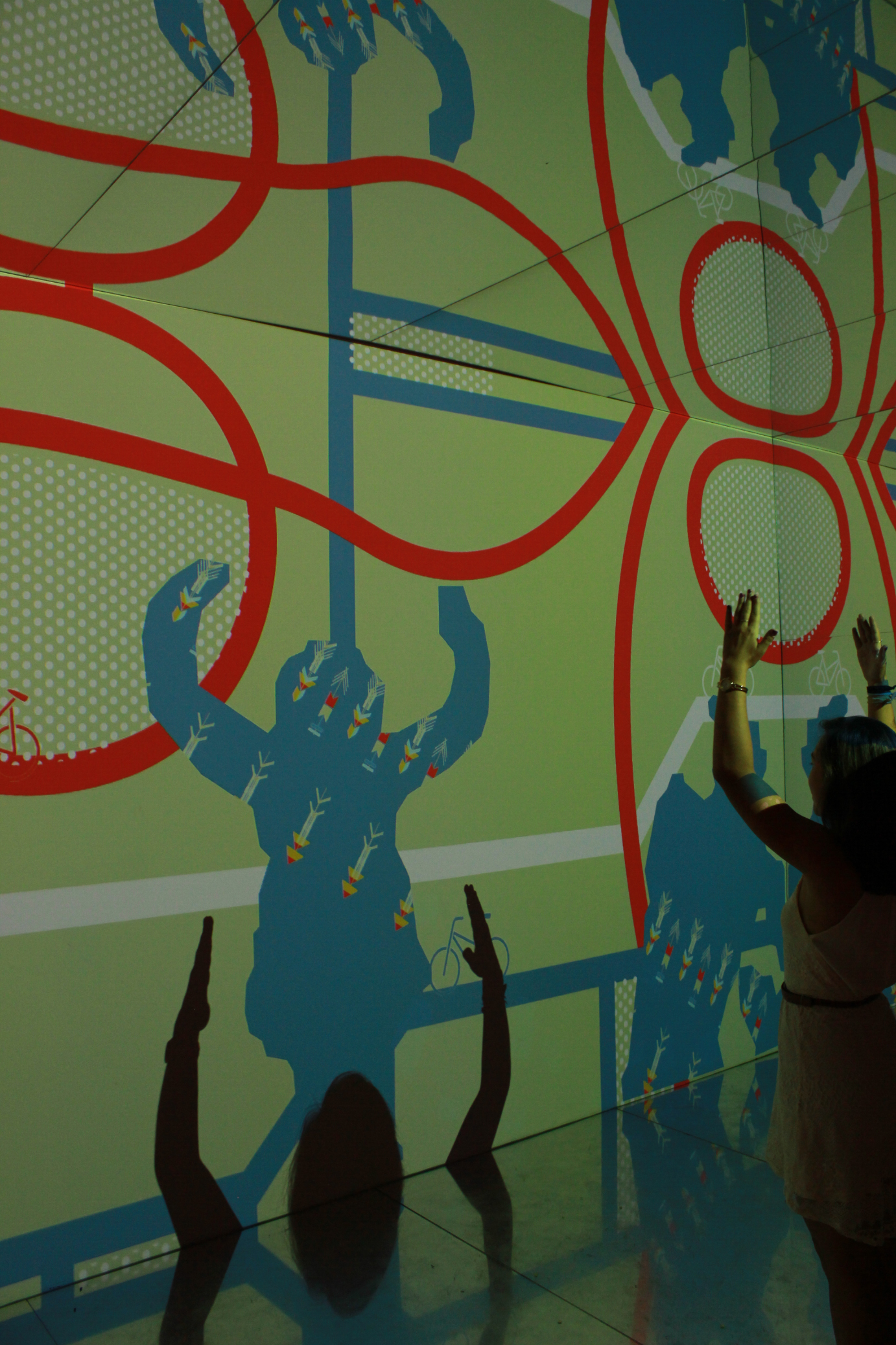
Overview We created two systems of custom software for Writing
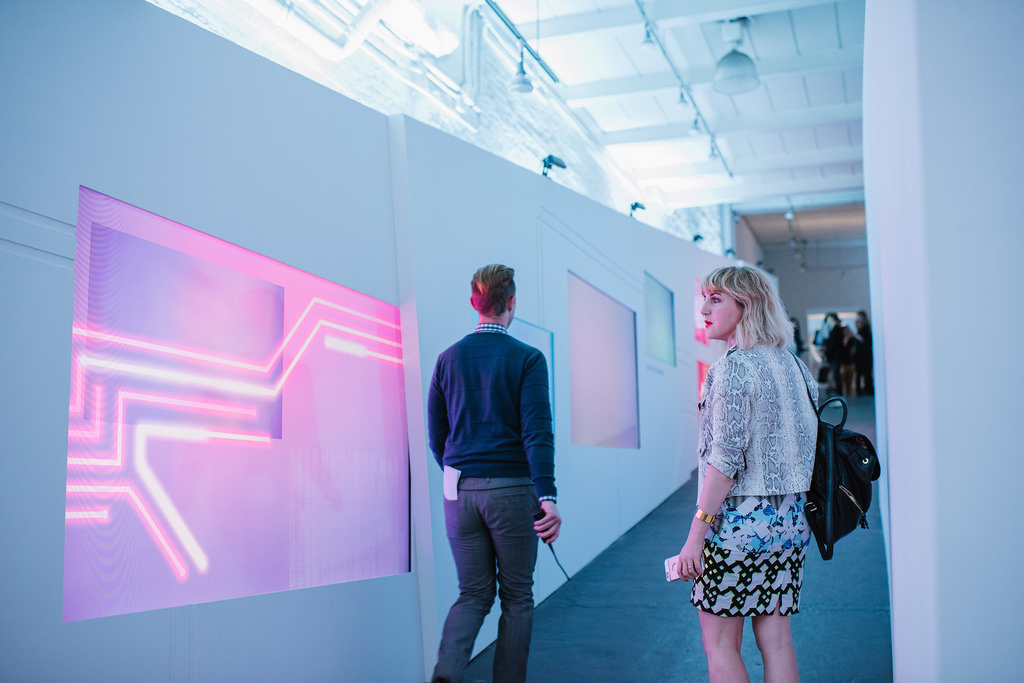
Corpora. The first was a fluid-dynamics “touch-floor”, an alphabet
soup of letters that congeal into legible phrases and words when
certain regions of the floor projection are stepped on, which is
also an interactive element that remains for current and future
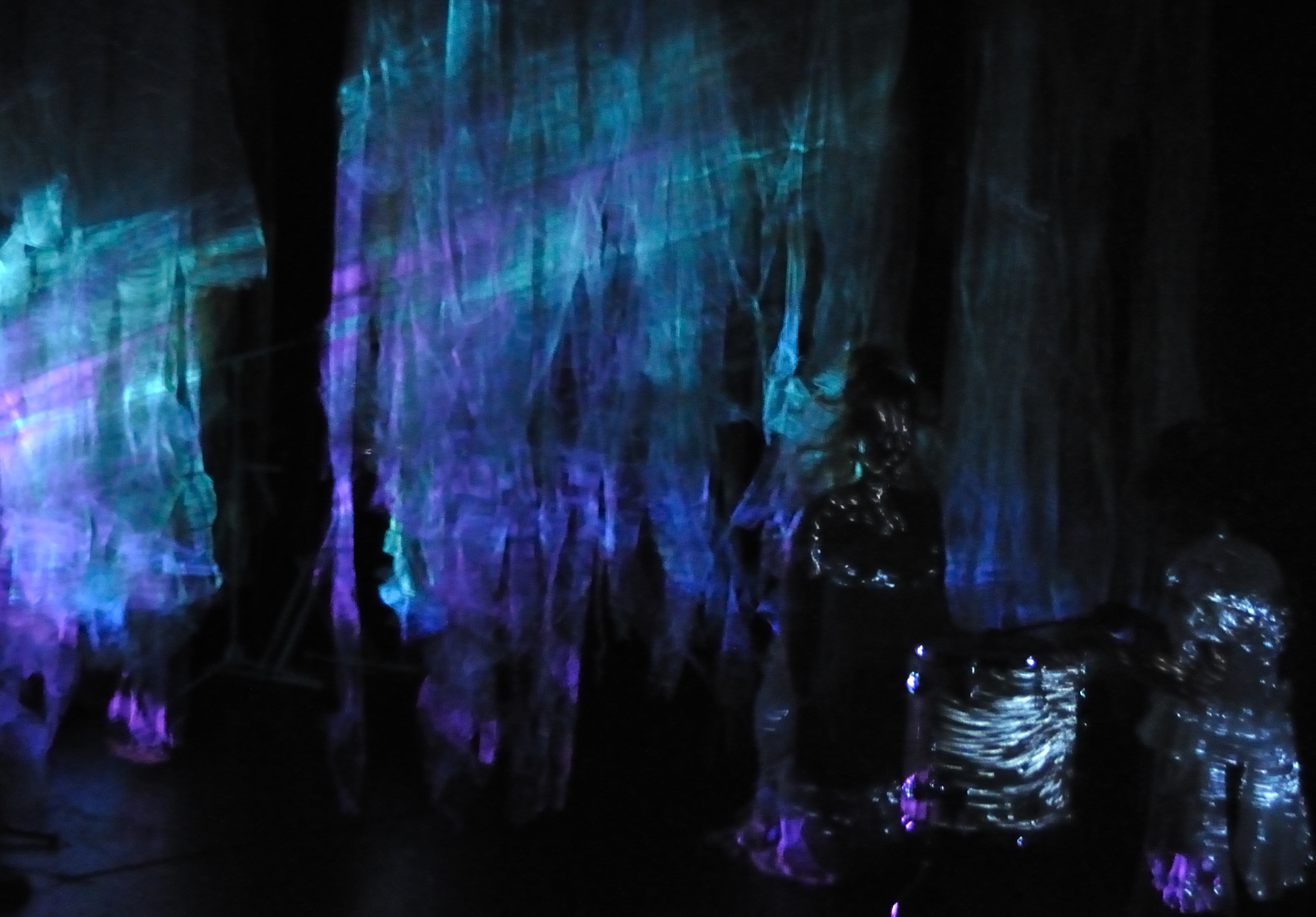
gallery attendees. When a phrase formed in the text fluid it also
simultaneously played an audio clip on overhead speakers of the
same idiom being spoken in Galician if the text was in English and
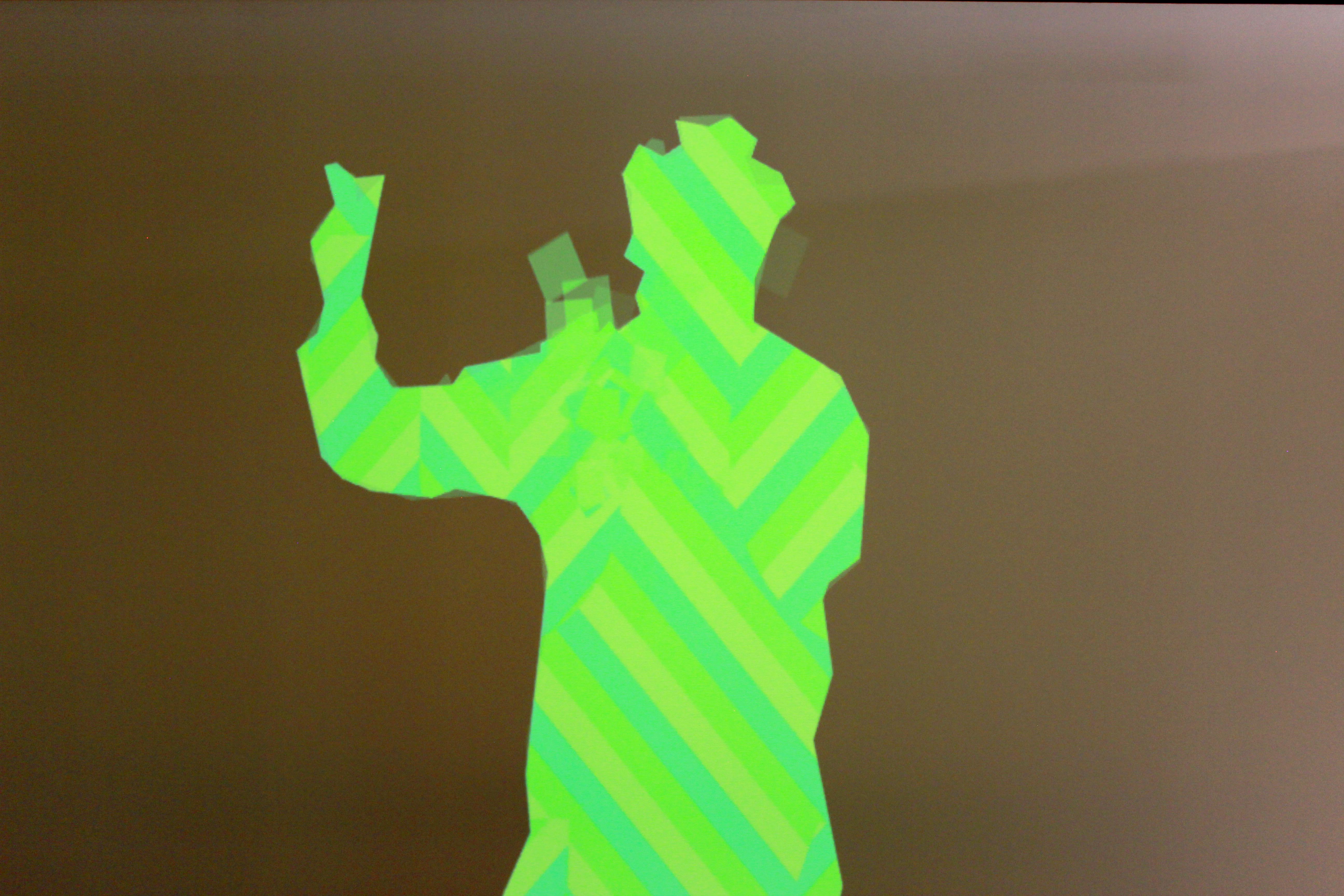
vice-versa. The other software, used only during the performance
by the artist, tracked skeleton data from a Kinect depth camera
for real-time control of audio/visual elements with physical body
gestures and movements. This tracked the physical distance between
almost every possible combination of skeletal joints (elbow to
head, foot to torso, knee to neck … you name it) and played back
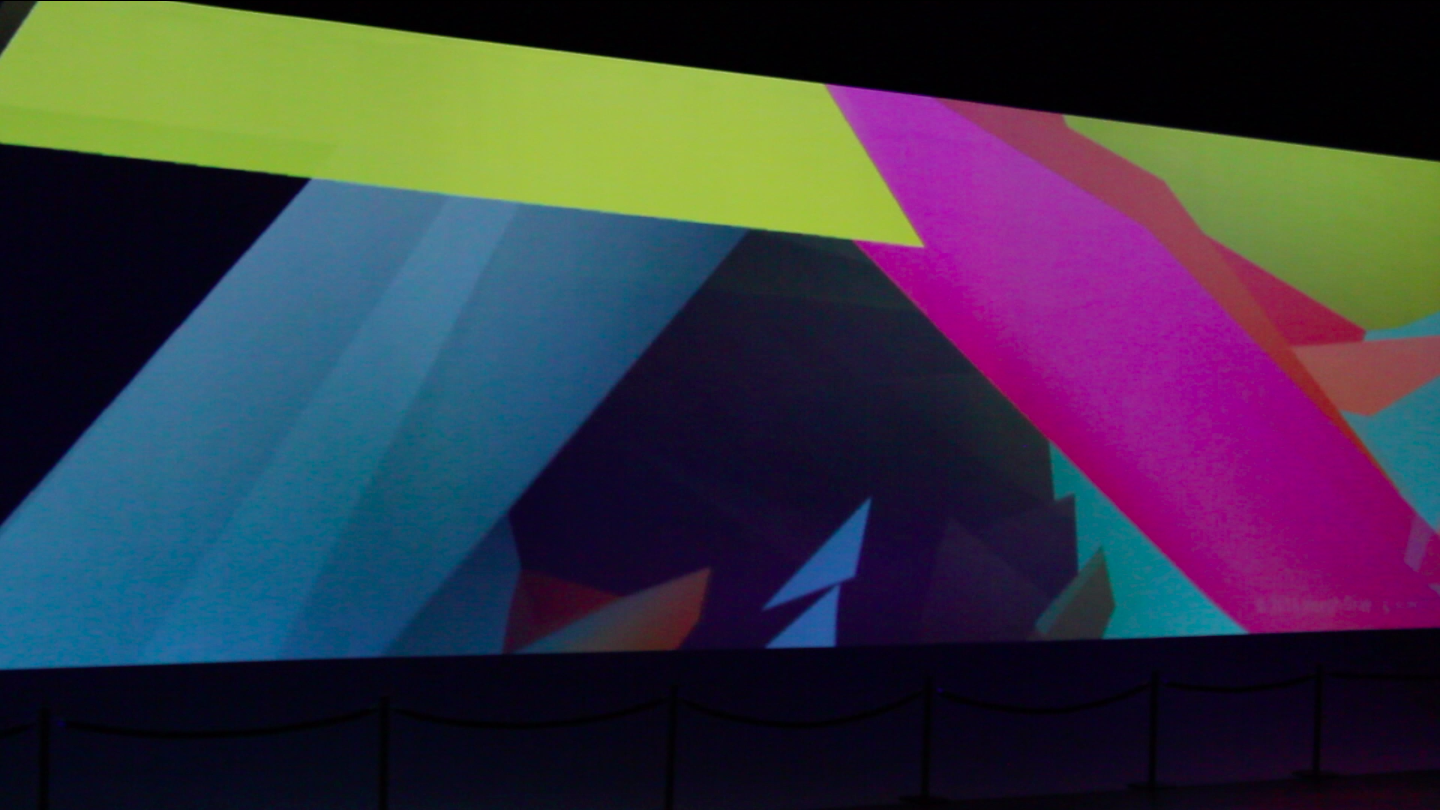
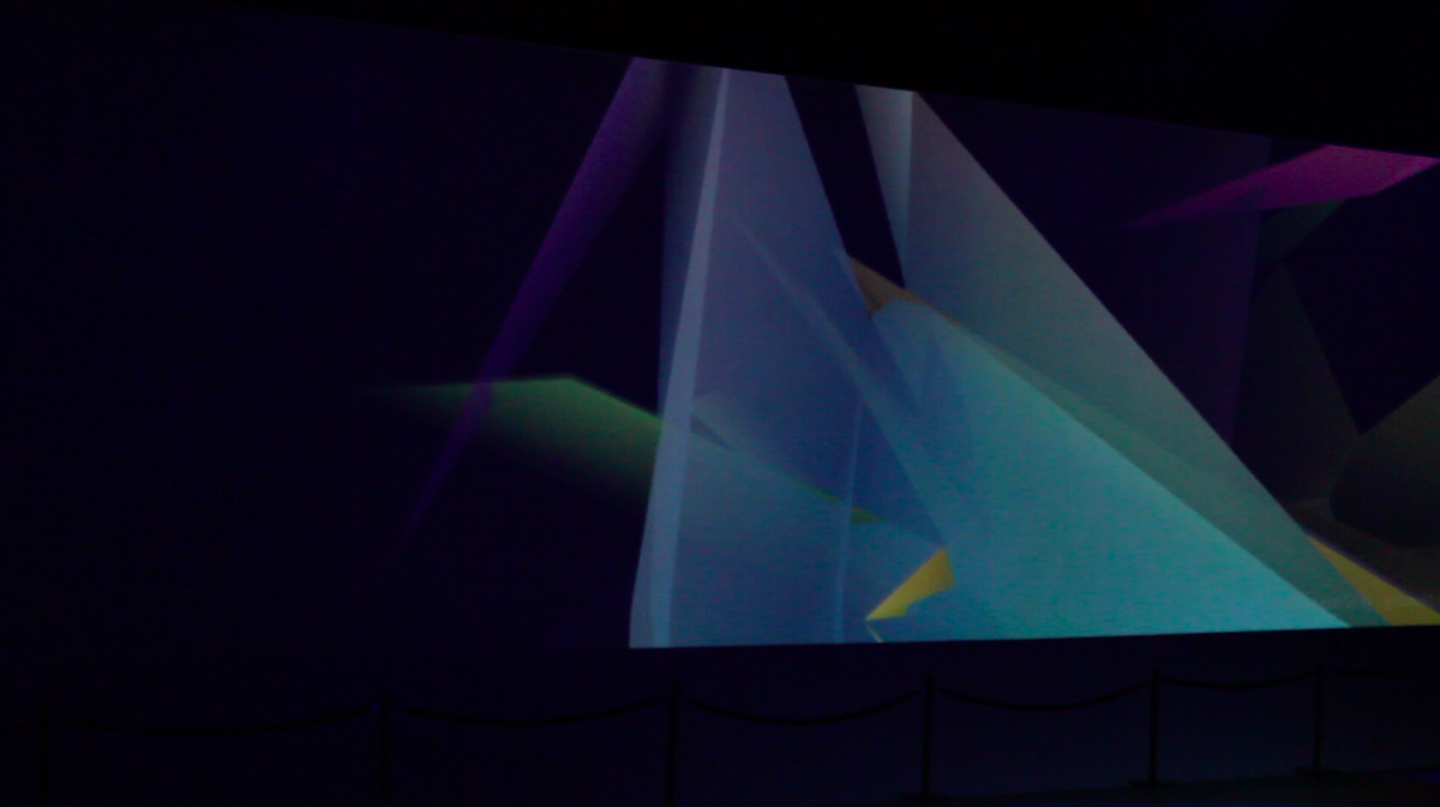
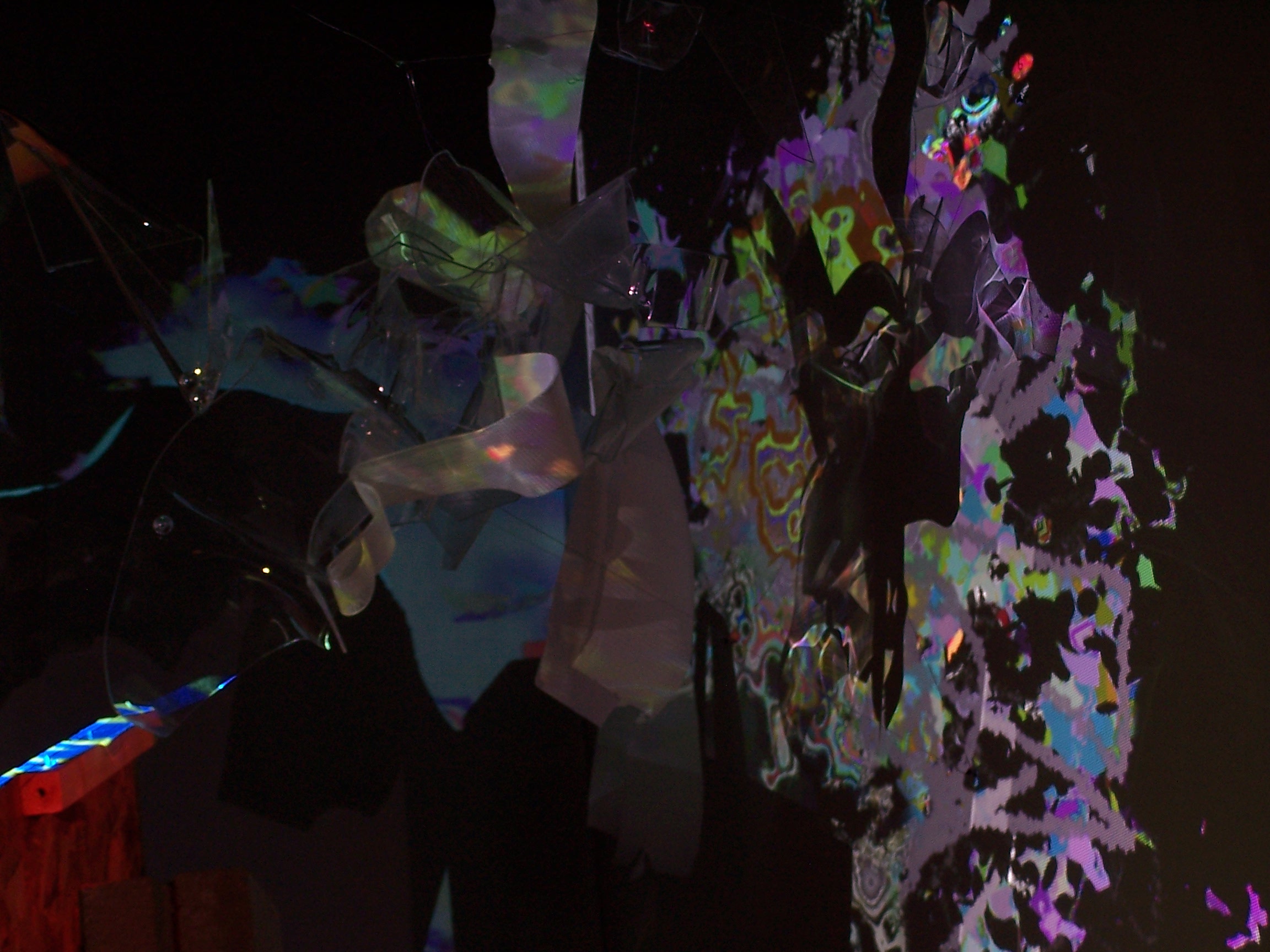
specific audio and/or video clips on one of three projectors in
the room while a forth displayed this tangle of gesture data
overlaid on the user’s tracked skeleton. Process I was contacted
by Gary’s studio assistant Reilly Donovan in late December to
write custom code to fulfill the artist’s concept as they were
hitting barriers with pre-built software. During this time
Süperfad was bringing me in as their lead creative developer, and
this project came with me. Süperfad founder and director Will Hyde
turned out to be a fan of Mr. Hill and not only agreed to send me
to Spain to help install the work but also sent along art director
Loren Judah to assist and document the process. Primarily we were
all excited about a collaboration in the realm of “pure art”
guided by Gary Hill’s vision and decades long experience of
creating conceptual works with new electronic mediums and
combining this with Süperfad’s digital tech skills. Reilly had
been experimenting with the Kinect platform, and some of the open
source performance software that has been developed for it, which
lead to their request for custom software to achieve certain
ideas. As we worked together developing the software these
objectives changed, sometimes due to a limitation we found in the
hardware, but also when a new possibility was discovered as we
began to understand the toolkit we were working with more clearly.
We continued developing the system for the MARCO performance right
up until the morning before the exhibition opening, and spent that
afternoon creating video clips (shot and edited by Superfad art
director Loren Judah, on the spot). Hours before showtime we
frantically entered references to the media files in xml notation,
along with gesture definitions, to configure the real-time
applications we’d spent the previous month and half creating.
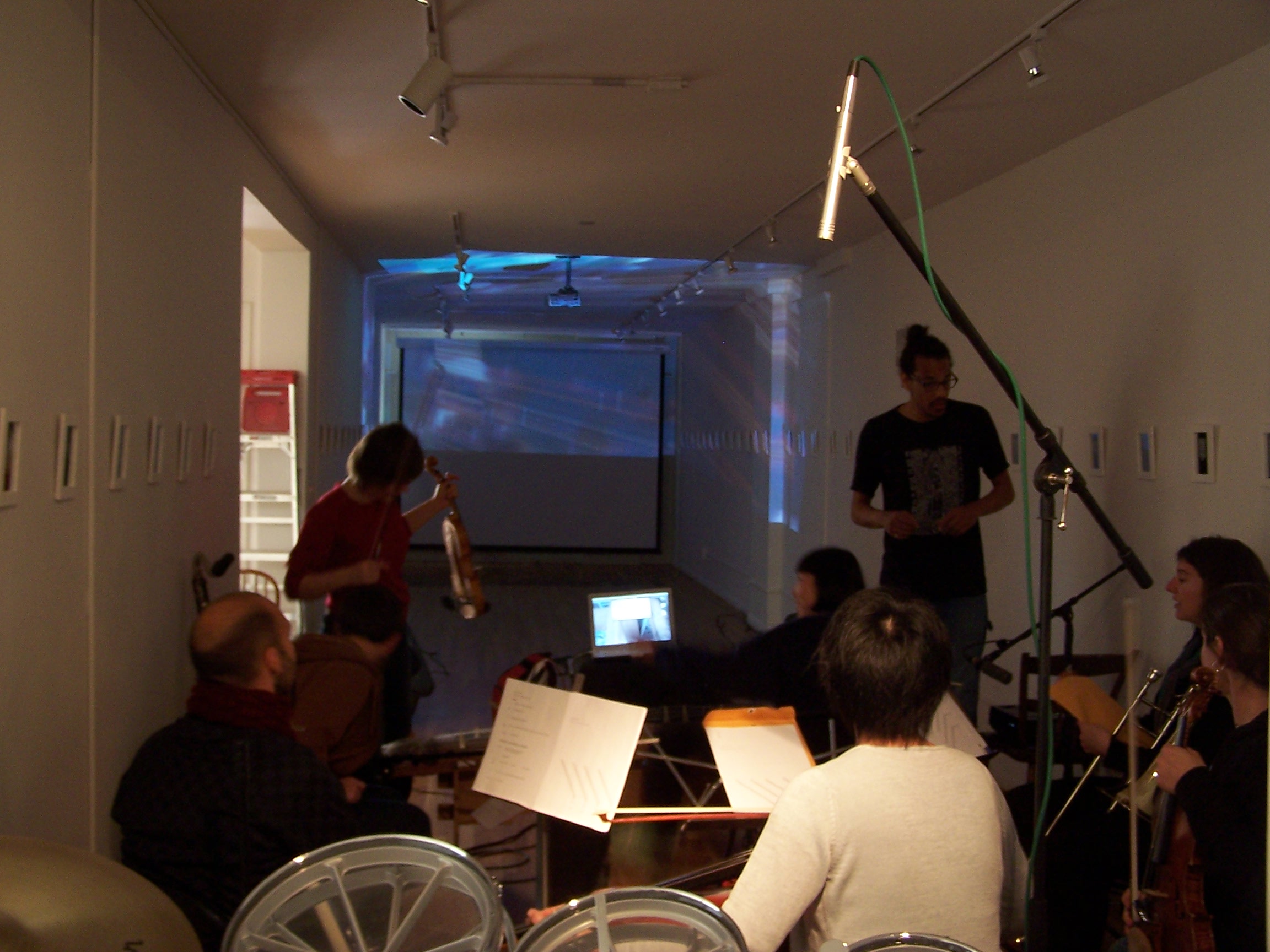
Amazingly it worked. The result was that once the performer was
being tracked by the Kinect almost any sudden series of movements
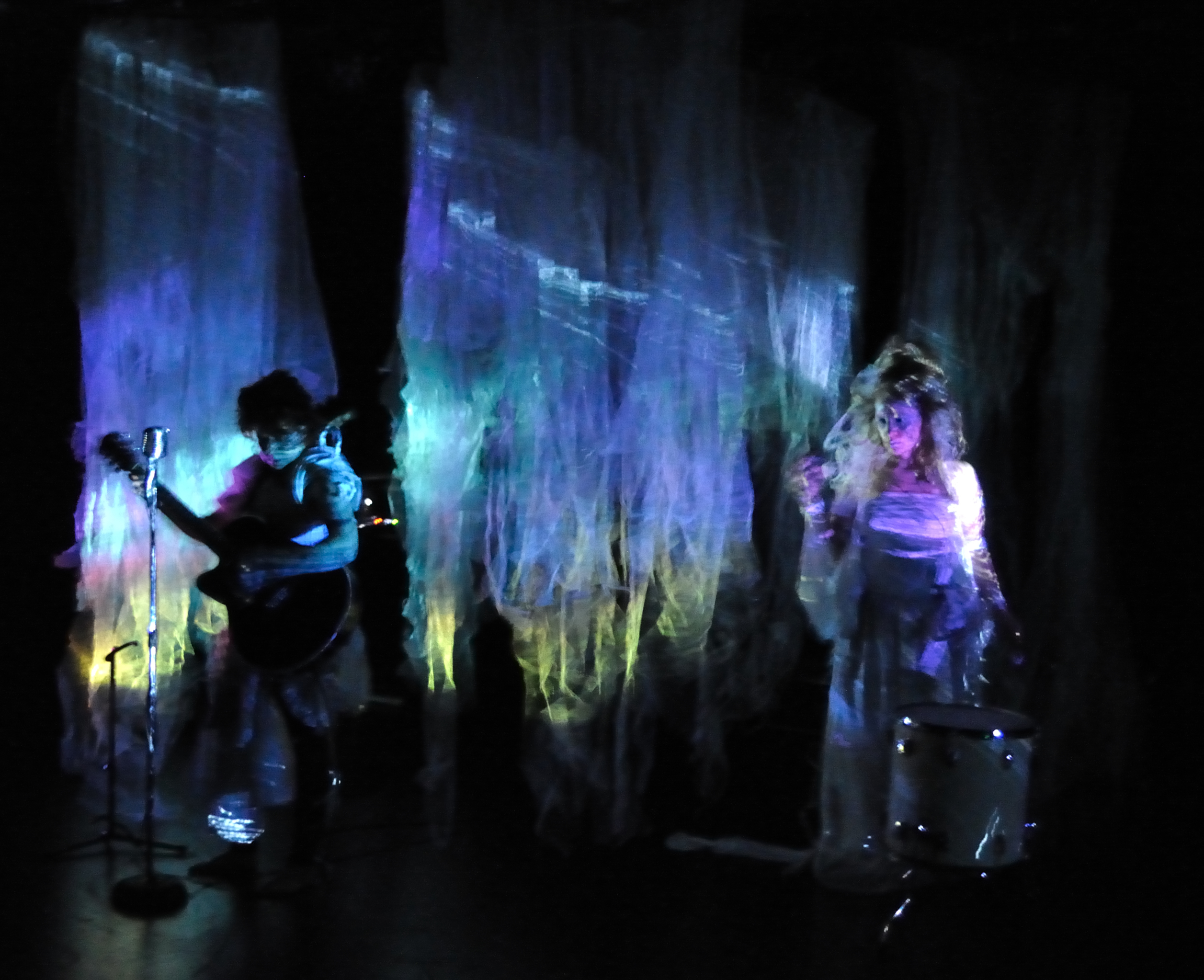
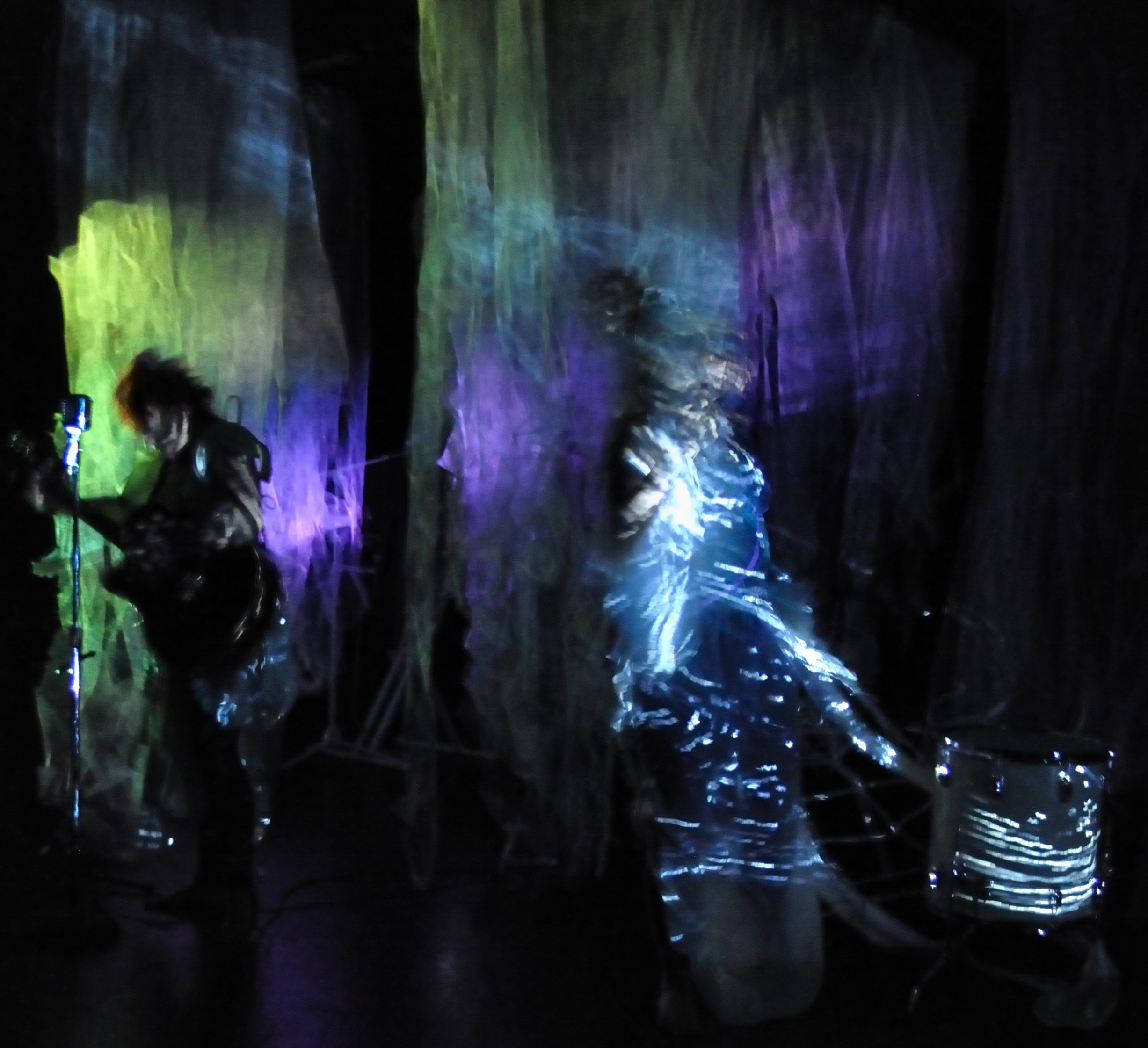
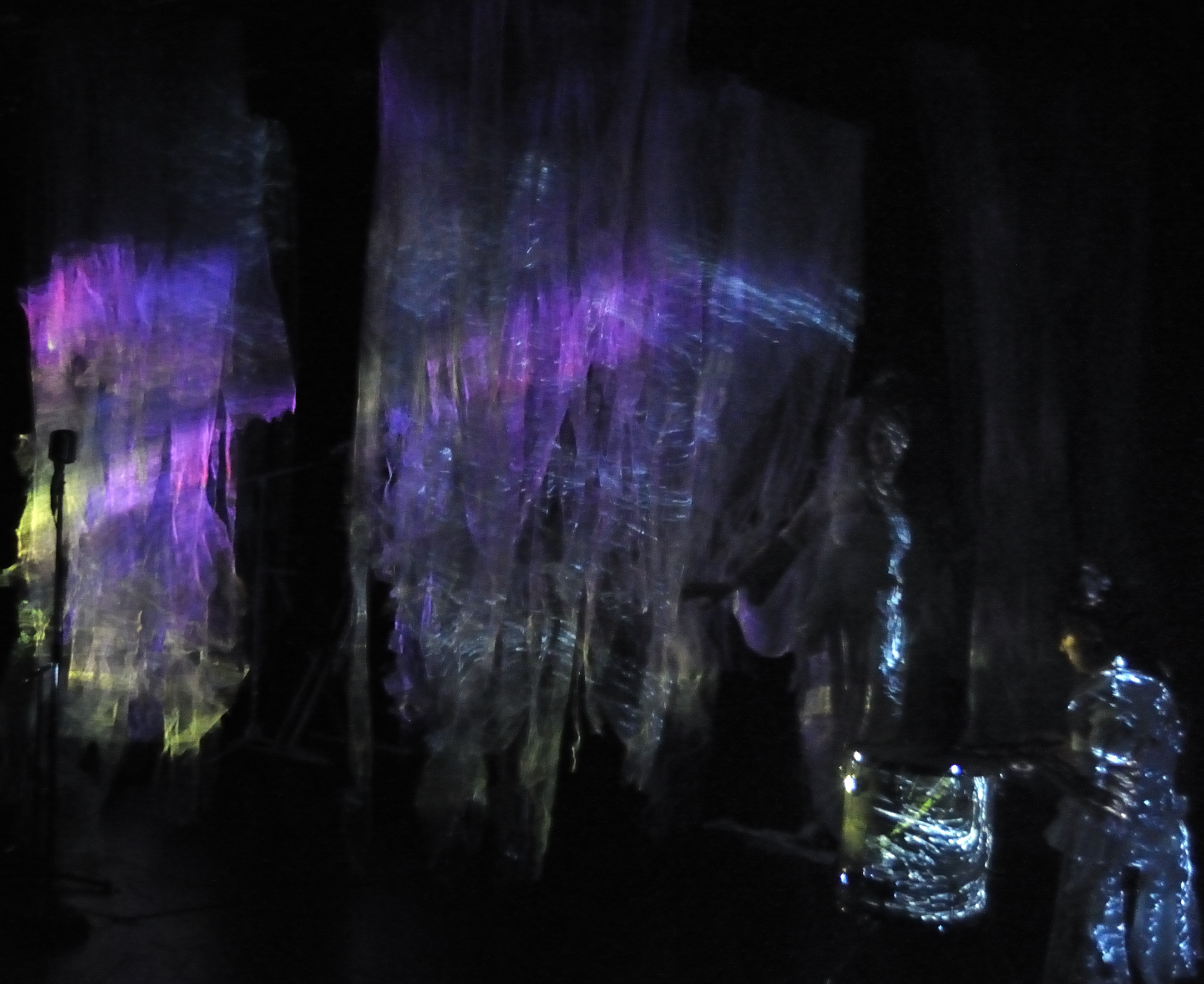
created a cacophony of enveloping media. The piece was performed
once, recorded as a four channel video, and is now, as of this
writing, playing back daily in the Museum gallery where it was
recorded. The video recordings were captured directly from the
feed going to the projectors in the gallery, providing a
time-delayed semblance of the once live performance, sans
performer. Technicalities The software was written in the
Processing programming language using a variety of third-party
libraries for that coding environment. Several networked computers
ran the software which communicated via OSC to pass control data
between them. The MARCO galleries are quite large, this provided a
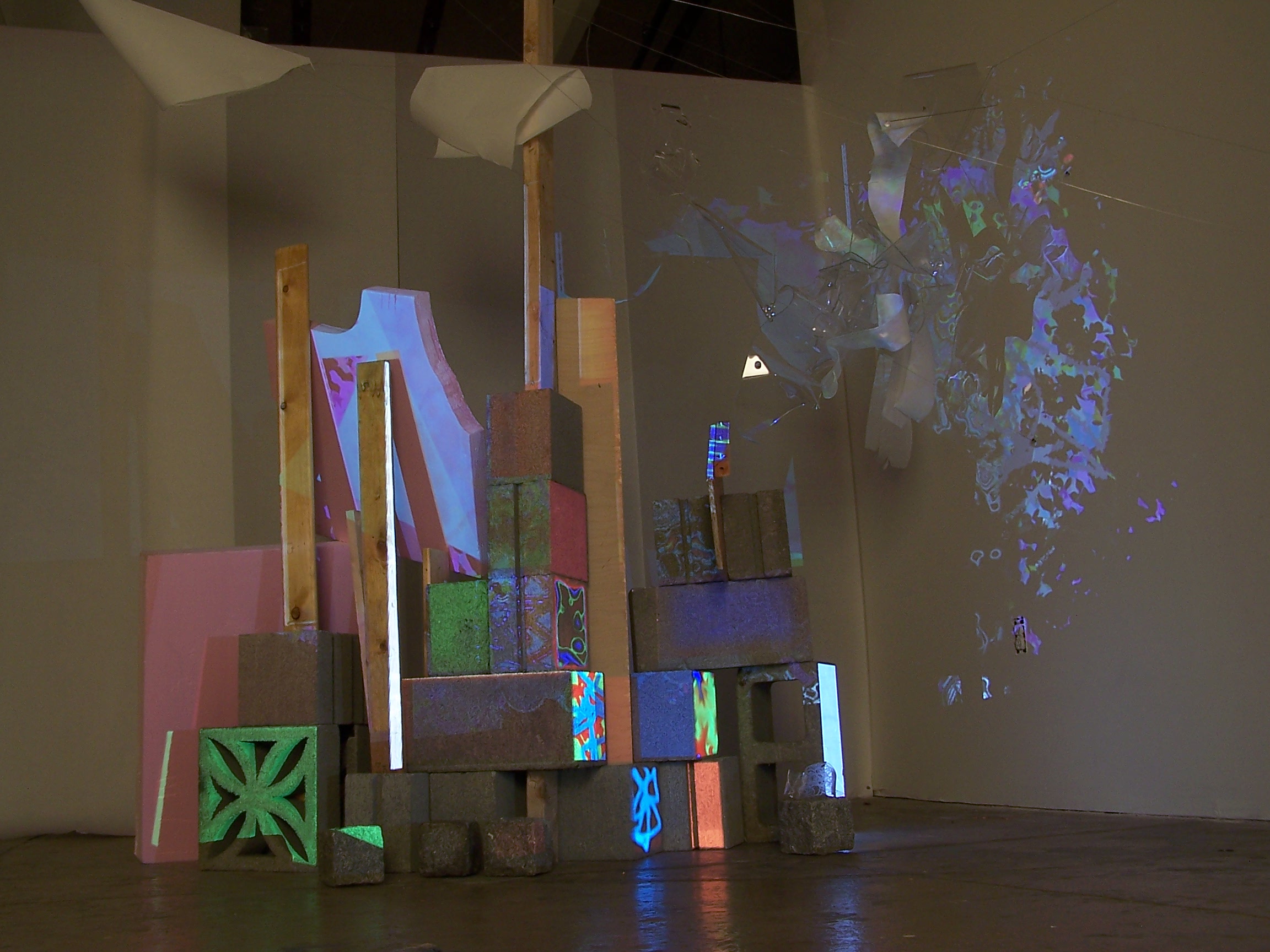
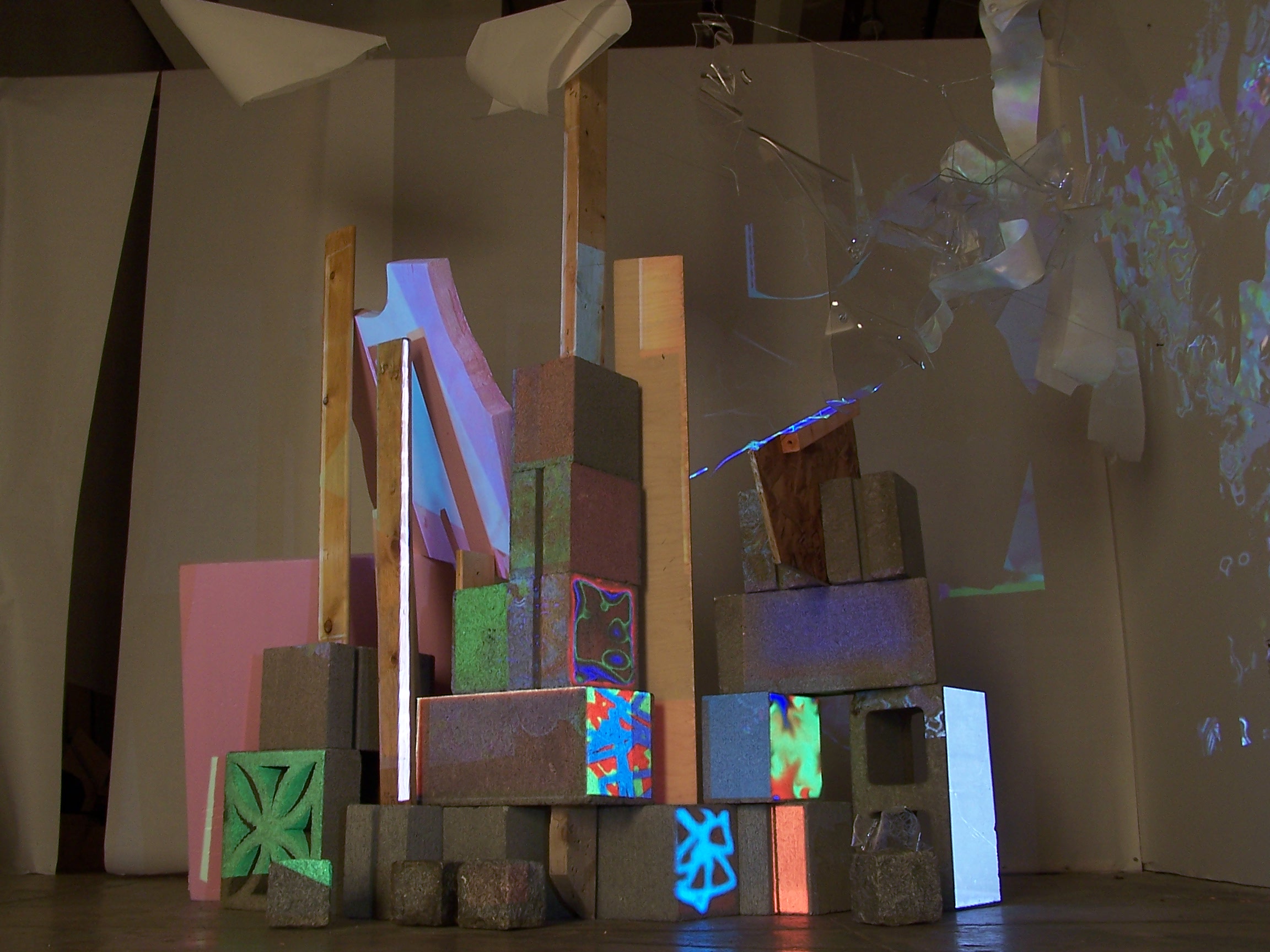
large canvas of white gallery walls to project on. In the end we
used five projectors, each fed images by a Mac-Minis networked
together via ethernet. The entire hardware system was mounted to a
large circular lighting truss that the museum had on hand. For the
performance a stage sound system was utilized for audio playback
into the gallery. The first application we built,
TextFluidCongeal, was a fluid dynamics particle system where each
particle was an individual letter in a phrase. A Kinect, looking
down from above and right beside the video projector, tracked
movement of feet walking through the fluid. We used the very
stable NecTouch by French software artist Benjamin Kuperberg for
control data here. NecTouch outputs TUIO, a multi-touch focused
specification of OSC, sending the x,y locations of each foot it
detects (normally it would be fingers, but we tweaked some
settings). We also used Memo Akten’s overly-abused fluid dynamics
framework MSAFluid, which, incidentally, receives TUIO quite
readily in one of it’s examples for Processing. Some hacking of
these two things together, along with several dozen lines of
custom code (Processing: the duct-tape of programming languages),
allowed us to read phrases we notated in an XML file, and set
trigger points that would “congeal” an individual phrase when it’s
trigger area was stepped on. A simultaneous phrase would be spoken
on the overhead speakers when this occurred by sending an OSC
message to another computer on the network to trigger an audio
only version of the software described below. The other
application, which I ultimately dubbed MegaFlip, tracked skeleton
data and could activate triggers when two or three joints of the
users skeleton were in certain range-distance of each other. For
example, while the app tracked your movements, touching your head
with your right hand could trigger a video clip displayed on a
video projector, while touching your right foot with your left
hand might trigger an audio clip played back on overhead speakers.
Additionally the software could send and receive OSC messages to
the other computers so that a gesture tracked by any one computer
could trigger play back on any other computer. Each computer’s
instance of the application was configured with an XML file. Each
node in the XML defined a relationship between joints (i.e. right
foot to left hand) and the distance those joints had to be within
to trigger a function, also defined in the XML element, along with
a reference to which audio or video file to play back and on which
computer (by IP address on the local network). Live cameras were
also hooked into the software and could be turned on and off via
various gestures. MegaFlip was constructed with multiple
Processing libraries as well. SimpleOpenNI was used for
interfacing with the Kinect and skeleton tracking. Andres
Colubri‘s library GSVideo was used for audio and video playback.
Andreas Schlegel‘s oscP5 library was used for OSC communication.
Benjamin Kuperberg’s MapiNect was also a great inspiration for our
XML mapping schema, as we essentially created a simplified version
of this within the software. During the performance five computers
ran MegaFlip simultaneously. The original plan was to have each
connected to it’s own Kinect and projector, having them all track
the performers skeleton simultaneously and trigger various media.
We discovered though that the Kinects interfered with each other
when their field of view overlapped too much, and given the
circular arrangement of the gallery lighting grid we had to
abandon having multiple skeleton tracking computers (though I did
manage to get all 5 Kinects track me for half an hour without
loosing track during some tests… ). Interestingly the Kinect
facing the floor for the text fluid software described above did
not interfere with the one Kinect we used for skeleton tracking.
The system was truly put through it’s paces during the actual
performance, with dozens of gesture mappings sending signals to
play media around the gallery space via the network. The system
ran without a hitch during the entire performance, suggesting that
it could be stable enough for longer or more complex
configurations. It is generic enough to be used for a near
infinite variety of unique performances and interactive
installations due to it’s ultra configurable nature.
When first getting hired on at Süperfad I created a set of
custom software for media artist Gary Hill’s 2012 work Writing
Corpora.
The new work was created for the international group exhibition
Active Presence: Action, Object and Public, which debuted at the
Museo MARCO in Vigo, Galacia (Spain) during February of this year.
The exhibition, curated by Sergio Edelsztein and Kathleen Forde,
focused on artists whose practice contains both performance and
installation elements. The overall gist of Writing Corpora,
without paraphrasing the artist too much, is physical gestures
triggering text, video and audio relating to idiomatic phrases
that refer to the human body (i.e. “put your foot in your mouth”),
in both English and, in this version, Galician (the native tongue
in Vigo). The piece is a continuation of the artist’s conceptual
work focused on the convergence of body and language utilizing our
current era’s ever evolving new technologies for self-expression.
For this project Süperfad provided technical support and code
development, creating a software framework that allowed the artist
to play back media elements throughout the gallery space with no
physical controller other than the performers movements. The
result is a full-featured toolkit that can trigger any audio
and/or video media with practically any body pose or gesture.
Overview We created two systems of custom software for Writing
Corpora. The first was a fluid-dynamics “touch-floor”, an alphabet
soup of letters that congeal into legible phrases and words when
certain regions of the floor projection are stepped on, which is
also an interactive element that remains for current and future
gallery attendees. When a phrase formed in the text fluid it also
simultaneously played an audio clip on overhead speakers of the
same idiom being spoken in Galician if the text was in English and
vice-versa. The other software, used only during the performance
by the artist, tracked skeleton data from a Kinect depth camera
for real-time control of audio/visual elements with physical body
gestures and movements. This tracked the physical distance between
almost every possible combination of skeletal joints (elbow to
head, foot to torso, knee to neck … you name it) and played back
specific audio and/or video clips on one of three projectors in
the room while a forth displayed this tangle of gesture data
overlaid on the user’s tracked skeleton. Process I was contacted
by Gary’s studio assistant Reilly Donovan in late December to
write custom code to fulfill the artist’s concept as they were
hitting barriers with pre-built software. During this time
Süperfad was bringing me in as their lead creative developer, and
this project came with me. Süperfad founder and director Will Hyde
turned out to be a fan of Mr. Hill and not only agreed to send me
to Spain to help install the work but also sent along art director
Loren Judah to assist and document the process. Primarily we were
all excited about a collaboration in the realm of “pure art”
guided by Gary Hill’s vision and decades long experience of
creating conceptual works with new electronic mediums and
combining this with Süperfad’s digital tech skills. Reilly had
been experimenting with the Kinect platform, and some of the open
source performance software that has been developed for it, which
lead to their request for custom software to achieve certain
ideas. As we worked together developing the software these
objectives changed, sometimes due to a limitation we found in the
hardware, but also when a new possibility was discovered as we
began to understand the toolkit we were working with more clearly.
We continued developing the system for the MARCO performance right
up until the morning before the exhibition opening, and spent that
afternoon creating video clips (shot and edited by Superfad art
director Loren Judah, on the spot). Hours before showtime we
frantically entered references to the media files in xml notation,
along with gesture definitions, to configure the real-time
applications we’d spent the previous month and half creating.
Amazingly it worked. The result was that once the performer was
being tracked by the Kinect almost any sudden series of movements
created a cacophony of enveloping media. The piece was performed
once, recorded as a four channel video, and is now, as of this
writing, playing back daily in the Museum gallery where it was
recorded. The video recordings were captured directly from the
feed going to the projectors in the gallery, providing a
time-delayed semblance of the once live performance, sans
performer. Technicalities The software was written in the
Processing programming language using a variety of third-party
libraries for that coding environment. Several networked computers
ran the software which communicated via OSC to pass control data
between them. The MARCO galleries are quite large, this provided a
large canvas of white gallery walls to project on. In the end we
used five projectors, each fed images by a Mac-Minis networked
together via ethernet. The entire hardware system was mounted to a
large circular lighting truss that the museum had on hand. For the
performance a stage sound system was utilized for audio playback
into the gallery. The first application we built,
TextFluidCongeal, was a fluid dynamics particle system where each
particle was an individual letter in a phrase. A Kinect, looking
down from above and right beside the video projector, tracked
movement of feet walking through the fluid. We used the very
stable NecTouch by French software artist Benjamin Kuperberg for
control data here. NecTouch outputs TUIO, a multi-touch focused
specification of OSC, sending the x,y locations of each foot it
detects (normally it would be fingers, but we tweaked some
settings). We also used Memo Akten’s overly-abused fluid dynamics
framework MSAFluid, which, incidentally, receives TUIO quite
readily in one of it’s examples for Processing. Some hacking of
these two things together, along with several dozen lines of
custom code (Processing: the duct-tape of programming languages),
allowed us to read phrases we notated in an XML file, and set
trigger points that would “congeal” an individual phrase when it’s
trigger area was stepped on. A simultaneous phrase would be spoken
on the overhead speakers when this occurred by sending an OSC
message to another computer on the network to trigger an audio
only version of the software described below. The other
application, which I ultimately dubbed MegaFlip, tracked skeleton
data and could activate triggers when two or three joints of the
users skeleton were in certain range-distance of each other. For
example, while the app tracked your movements, touching your head
with your right hand could trigger a video clip displayed on a
video projector, while touching your right foot with your left
hand might trigger an audio clip played back on overhead speakers.
Additionally the software could send and receive OSC messages to
the other computers so that a gesture tracked by any one computer
could trigger play back on any other computer. Each computer’s
instance of the application was configured with an XML file. Each
node in the XML defined a relationship between joints (i.e. right
foot to left hand) and the distance those joints had to be within
to trigger a function, also defined in the XML element, along with
a reference to which audio or video file to play back and on which
computer (by IP address on the local network). Live cameras were
also hooked into the software and could be turned on and off via
various gestures. MegaFlip was constructed with multiple
Processing libraries as well. SimpleOpenNI was used for
interfacing with the Kinect and skeleton tracking. Andres
Colubri‘s library GSVideo was used for audio and video playback.
Andreas Schlegel‘s oscP5 library was used for OSC communication.
Benjamin Kuperberg’s MapiNect was also a great inspiration for our
XML mapping schema, as we essentially created a simplified version
of this within the software. During the performance five computers
ran MegaFlip simultaneously. The original plan was to have each
connected to it’s own Kinect and projector, having them all track
the performers skeleton simultaneously and trigger various media.
We discovered though that the Kinects interfered with each other
when their field of view overlapped too much, and given the
circular arrangement of the gallery lighting grid we had to
abandon having multiple skeleton tracking computers (though I did
manage to get all 5 Kinects track me for half an hour without
loosing track during some tests… ). Interestingly the Kinect
facing the floor for the text fluid software described above did
not interfere with the one Kinect we used for skeleton tracking.
The system was truly put through it’s paces during the actual
performance, with dozens of gesture mappings sending signals to
play media around the gallery space via the network. The system
ran without a hitch during the entire performance, suggesting that
it could be stable enough for longer or more complex
configurations. It is generic enough to be used for a near
infinite variety of unique performances and interactive
installations due to it’s ultra configurable nature.